Leading Beyond Conflict: How Development and Dialogue Sustain Peace
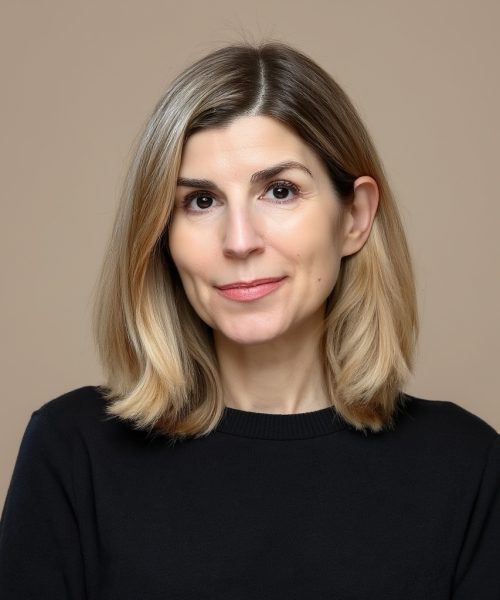
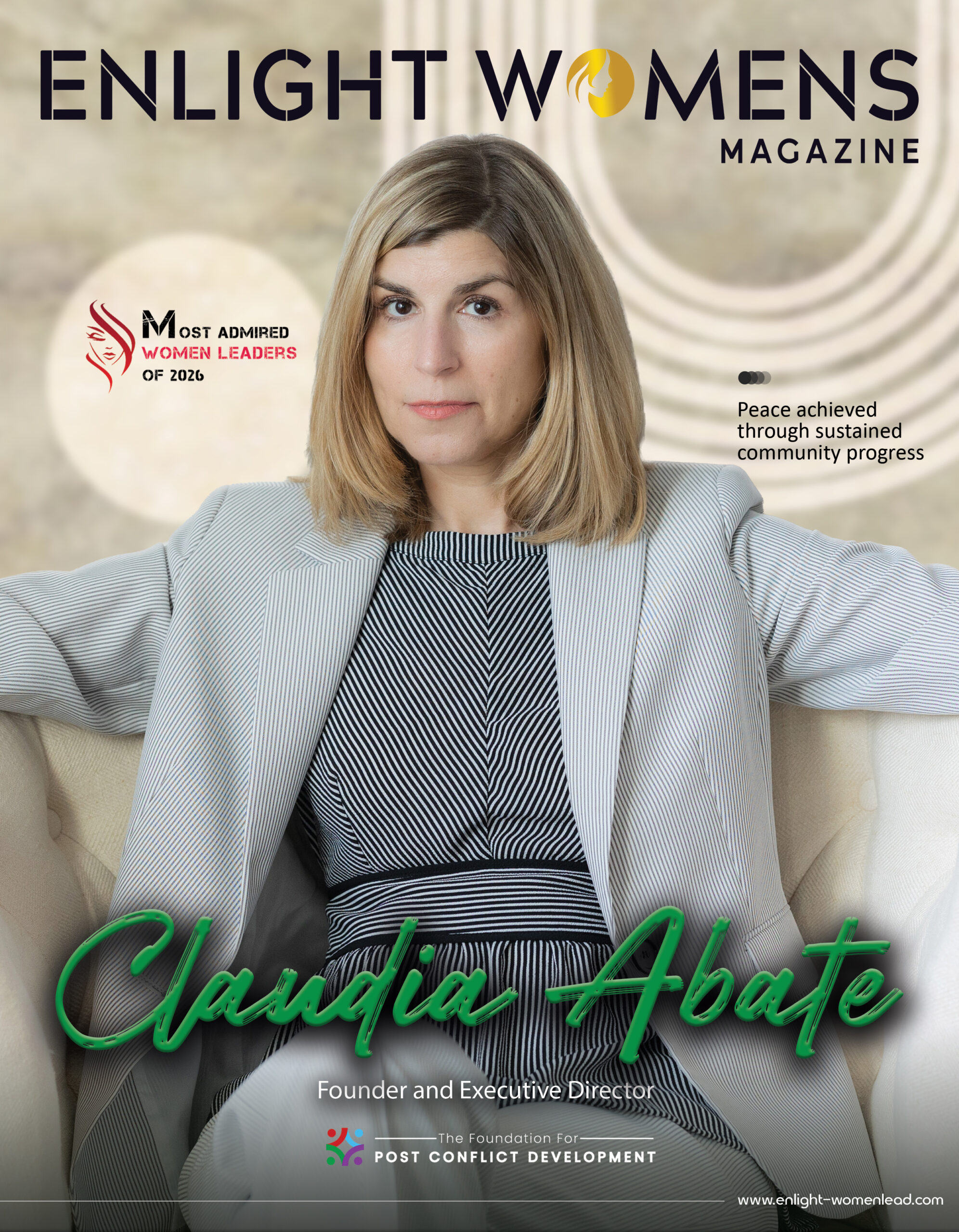
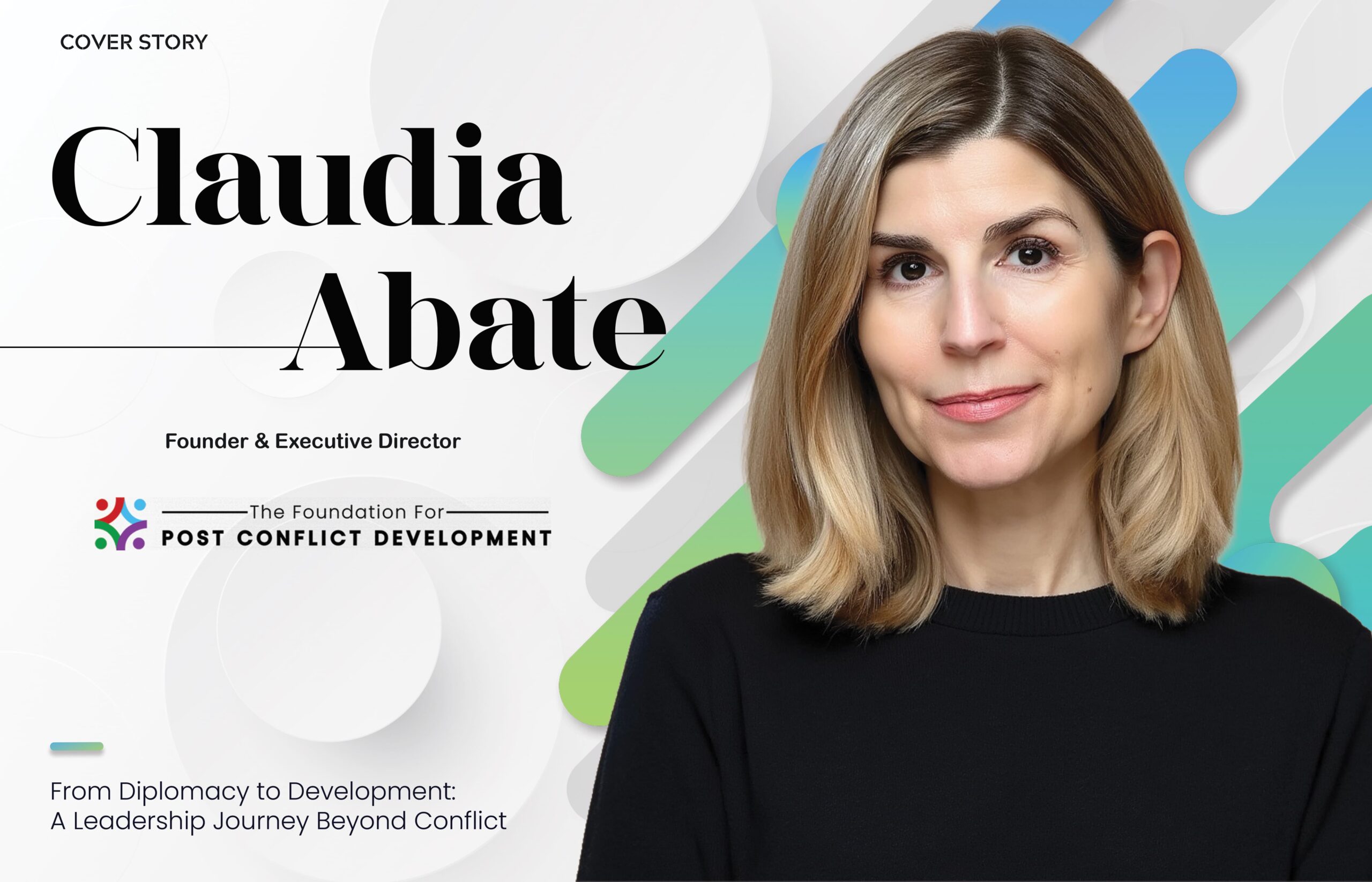
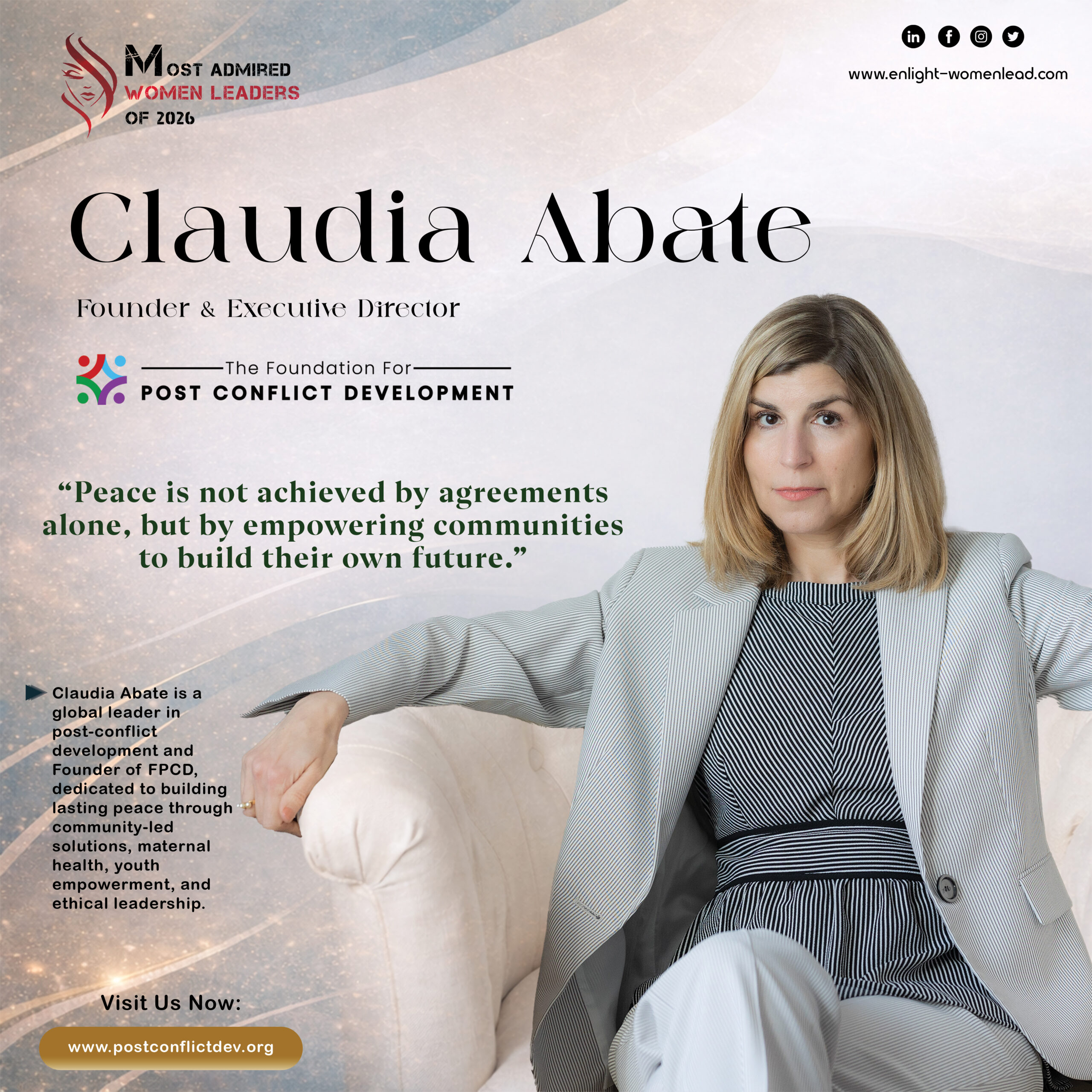
Claudia Abate’s career has been shaped by her dedication to serving others, influenced by past events, and driven by a strong commitment to helping people. In her role as Founder and Executive Director of The Foundation for Post-Conflict Development (FPCD), she has spent over twenty years working to ensure that peace is not just a temporary ceasefire, but a lasting result achieved through ongoing, community-focused progress.
Claudia’s path toward founding FPCD was influenced by both personal heritage and global experience. Her father, a World War II veteran who helped liberate concentration camps in Europe, instilled in her a profound awareness of the consequences of conflict. Her Swedish mother broadened her worldview and nurtured sensitivity toward the struggles of others.
These early influences converged during her career as an International Civil Servant at the United Nations, where Claudia organized high-level Security Council and General Assembly summits and supported peacekeeping missions in regions including Timor-Leste and Fiji. While witnessing historic diplomatic moments, she also recognized a recurring truth: peacekeeping alone was insufficient without sustained development that directly improved people’s lives.
Claudia emphasizes that recovery efforts must be inclusive and participatory, grounded in the priorities of local communities. When communities help design their own development pathways, the risk of returning to conflict is significantly reduced.
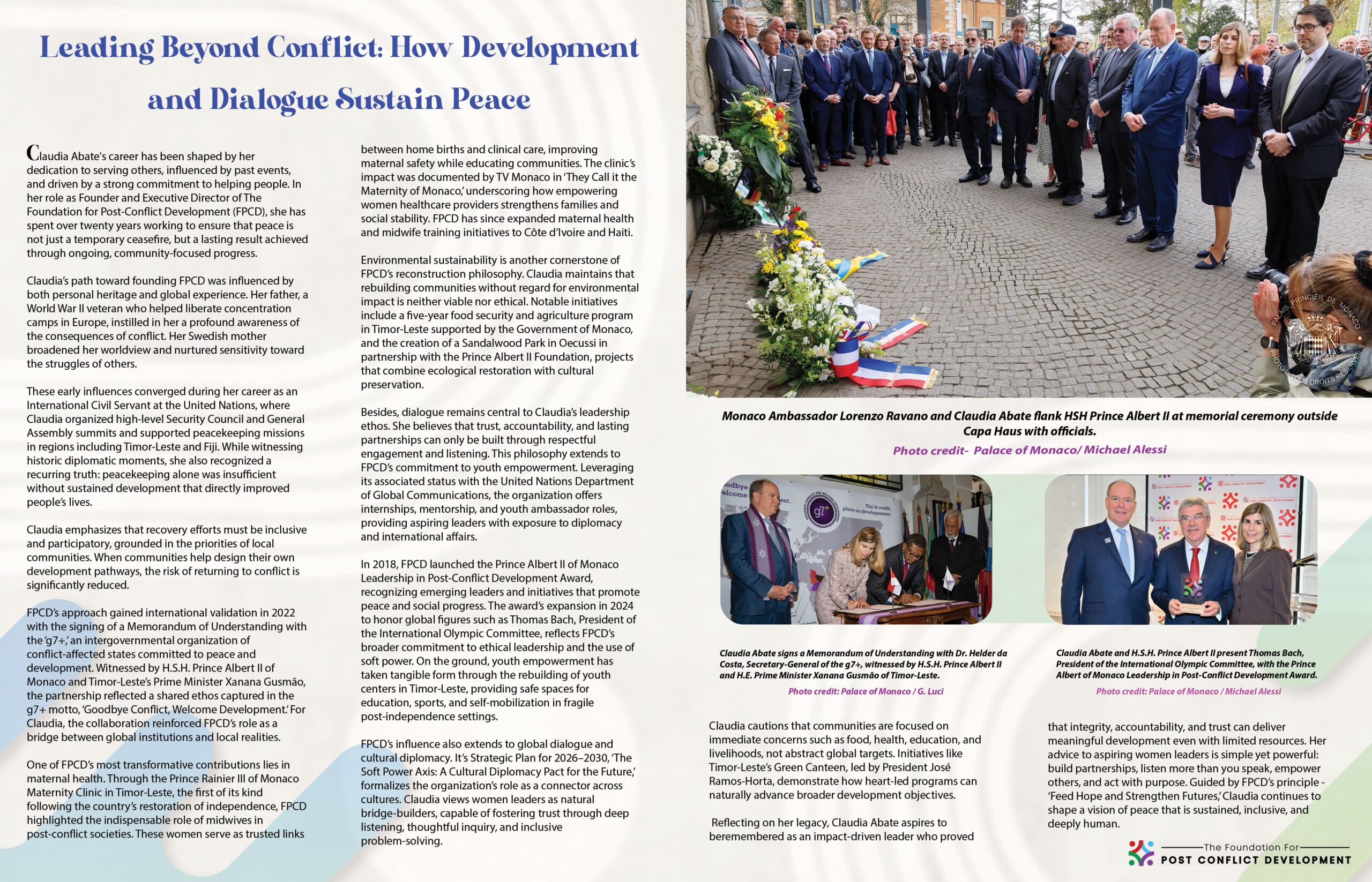
FPCD’s approach gained international validation in 2022 with the signing of a Memorandum of Understanding with the ‘g7+,’ an intergovernmental organization of conflict-affected states committed to peace and development. Witnessed by H.S.H. Prince Albert II of Monaco and Timor-Leste’s Prime Minister Xanana Gusmão, the partnership reflected a shared ethos captured in the g7+ motto, ‘Goodbye Conflict, Welcome Development.’ For Claudia, the collaboration reinforced FPCD’s role as a bridge between global institutions and local realities.
One of FPCD’s most transformative contributions lies in maternal health. Through the Prince Rainier III of Monaco Maternity Clinic in Timor-Leste, the first of its kind following the country’s restoration of independence, FPCD highlighted the indispensable role of midwives in post-conflict societies. These women serve as trusted link between home births and clinical care, improving maternal safety while educating communities. The clinic’s impact was documented by TV Monaco in ‘They Call it the Maternity of Monaco,’ underscoring how empowering women healthcare providers strengthens families and social stability. FPCD has since expanded maternal health and midwife training initiatives to Côte d’Ivoire and Haiti.
Environmental sustainability is another cornerstone of FPCD’s reconstruction philosophy. Claudia maintains that rebuilding communities without regard for environmental impact is neither viable nor ethical. Notable initiatives include a five-year food security and agriculture program in Timor-Leste supported by the Government of Monaco, and the creation of a Sandalwood Park in Oecussi in partnership with the Prince Albert II Foundation, projects that combine ecological restoration with cultural preservation.
Besides, dialogue remains central to Claudia’s leadership ethos. She believes that trust, accountability, and lasting partnerships can only be built through respectful engagement and listening. This philosophy extends to FPCD’s commitment to youth empowerment. Leveraging its associated status with the United Nations Department of Global Communications, the organization offers internships, mentorship, and youth ambassador roles, providing aspiring leaders with exposure to diplomacy and international affairs.
In 2018, FPCD launched the Prince Albert II of Monaco Leadership in Post-Conflict Development Award, recognizing emerging leaders and initiatives that promote peace and social progress. The award’s expansion in 2024 to honor global figures such as Thomas Bach, President of the International Olympic Committee, reflects FPCD’s broader commitment to ethical leadership and the use of soft power. On the ground, youth empowerment has taken tangible form through the rebuilding of youth centers in Timor-Leste, providing safe spaces for education, sports, and self-mobilization in fragile post-independence settings.
FPCD’s influence also extends to global dialogue and cultural diplomacy. It’s Strategic Plan for 2026–2030, ‘The Soft Power Axis: A Cultural Diplomacy Pact for the Future,’ formalizes the organization’s role as a connector across cultures. Claudia views women leaders as natural bridge-builders, capable of fostering trust through deep listening, thoughtful inquiry, and inclusive problem-solving.
Claudia cautions that communities are focused on immediate concerns such as food, health, education, and livelihoods, not abstract global targets. Initiatives like Timor-Leste’s Green Canteen, led by President José Ramos-Horta, demonstrate how heart-led programs can naturally advance broader development objectives.
Reflecting on her legacy, Claudia Abate aspires to beremembered as an impact-driven leader who proved that integrity, accountability, and trust can deliver meaningful development even with limited resources. Her advice to aspiring women leaders is simple yet powerful: build partnerships, listen more than you speak, empower others, and act with purpose. Guided by FPCD’s principle – ‘Feed Hope and Strengthen Futures,’ Claudia continues to shape a vision of peace that is sustained, inclusive, and deeply human.