The Strategic Role of Human Resources in Driving Business Success
Navigating Change:
A Human Resources Leader’s Perspective on Organizational Success
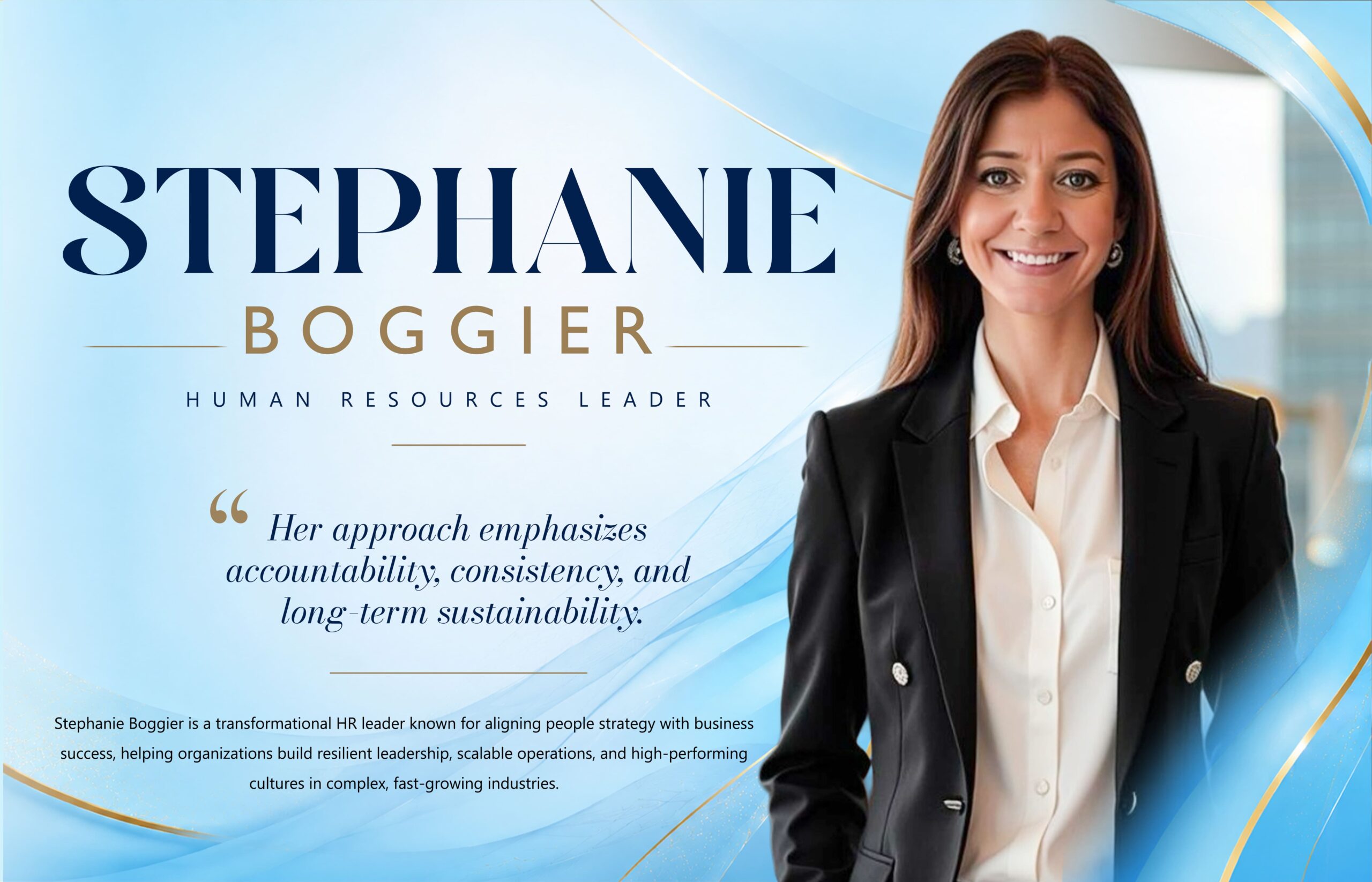
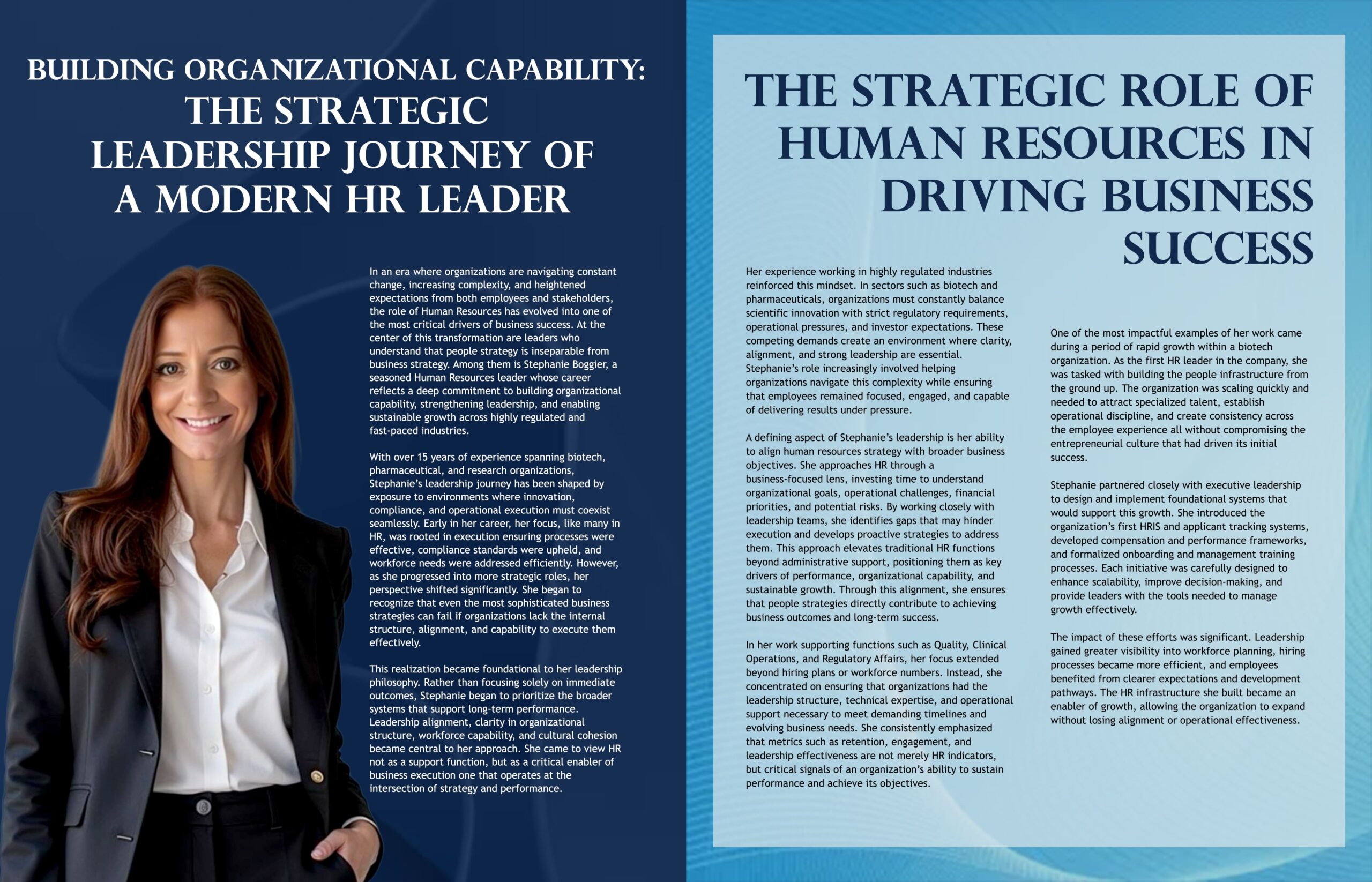
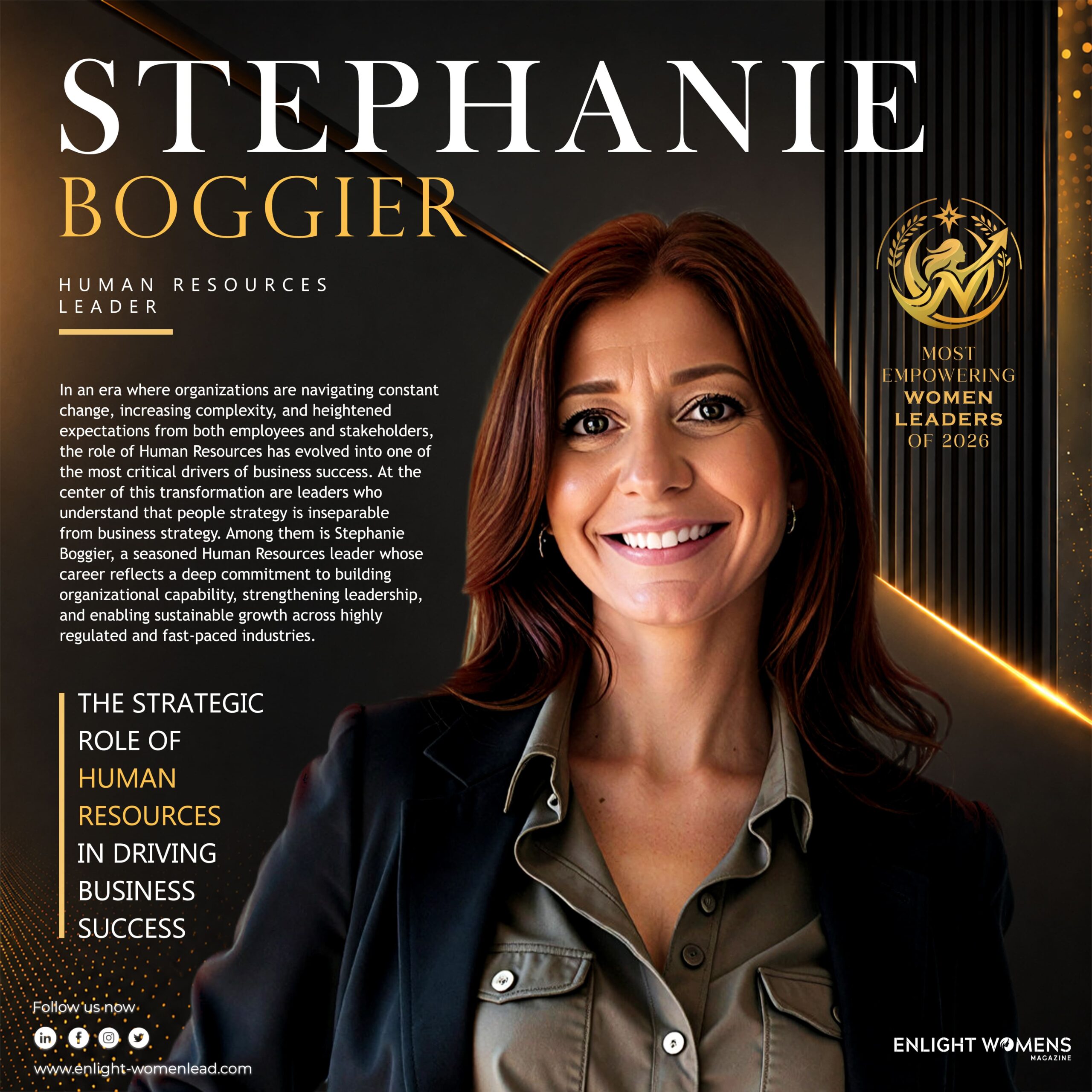
In an era where organizations are navigating constant change, increasing complexity, and heightened expectations from both employees and stakeholders, the role of Human Resources has evolved into one of the most critical drivers of business success. At the center of this transformation are leaders who understand that people strategy is inseparable from business strategy. Among them is Stephanie Boggier, a seasoned Human Resources leader whose career reflects a deep commitment to building organizational capability, strengthening leadership, and enabling sustainable growth across highly regulated and fast-paced industries.
With over 15 years of experience spanning biotech, pharmaceutical, and research organizations, Stephanie’s leadership journey has been shaped by exposure to environments where innovation, compliance, and operational execution must coexist seamlessly. Early in her career, her focus, like many in HR, was rooted in execution ensuring processes were effective, compliance standards were upheld, and workforce needs were addressed efficiently. However, as she progressed into more strategic roles, her perspective shifted significantly. She began to recognize that even the most sophisticated business strategies can fail if organizations lack the internal structure, alignment, and capability to execute them effectively.
This realization became foundational to her leadership philosophy. Rather than focusing solely on immediate outcomes, Stephanie began to prioritize the broader systems that support long-term performance. Leadership alignment, clarity in organizational structure, workforce capability, and cultural cohesion became central to her approach. She came to view HR not as a support function, but as a critical enabler of business execution one that operates at the intersection of strategy and performance.
Her experience working in highly regulated industries reinforced this mindset. In sectors such as biotech and pharmaceuticals, organizations must constantly balance scientific innovation with strict regulatory requirements, operational pressures, and investor expectations. These competing demands create an environment where clarity, alignment, and strong leadership are essential. Stephanie’s role increasingly involved helping organizations navigate this complexity while ensuring that employees remained focused, engaged, and capable of delivering results under pressure.
A defining aspect of Stephanie’s leadership is her ability to align human resources strategy with broader business objectives. She approaches HR through a business-focused lens, investing time to understand organizational goals, operational challenges, financial priorities, and potential risks. By working closely with leadership teams, she identifies gaps that may hinder execution and develops proactive strategies to address them. This approach elevates traditional HR functions beyond administrative support, positioning them as key drivers of performance, organizational capability, and sustainable growth. Through this alignment, she ensures that people strategies directly contribute to achieving business outcomes and long-term success.
In her work supporting functions such as Quality, Clinical Operations, and Regulatory Affairs, her focus extended beyond hiring plans or workforce numbers. Instead, she concentrated on ensuring that organizations had the leadership structure, technical expertise, and operational support necessary to meet demanding timelines and evolving business needs. She consistently emphasized that metrics such as retention, engagement, and leadership effectiveness are not merely HR indicators, but critical signals of an organization’s ability to sustain performance and achieve its objectives.
One of the most impactful examples of her work came during a period of rapid growth within a biotech organization. As the first HR leader in the company, she was tasked with building the people infrastructure from the ground up. The organization was scaling quickly and needed to attract specialized talent, establish operational discipline, and create consistency across the employee experience—all without compromising the entrepreneurial culture that had driven its initial success.
Stephanie partnered closely with executive leadership to design and implement foundational systems that would support this growth. She introduced the organization’s first HRIS and applicant tracking systems, developed compensation and performance frameworks, and formalized onboarding and management training processes. Each initiative was carefully designed to enhance scalability, improve decision-making, and provide leaders with the tools needed to manage growth effectively.
The impact of these efforts was significant. Leadership gained greater visibility into workforce planning, hiring processes became more efficient, and employees benefited from clearer expectations and development pathways. The HR infrastructure she built became an enabler of growth, allowing the organization to expand without losing alignment or operational effectiveness.
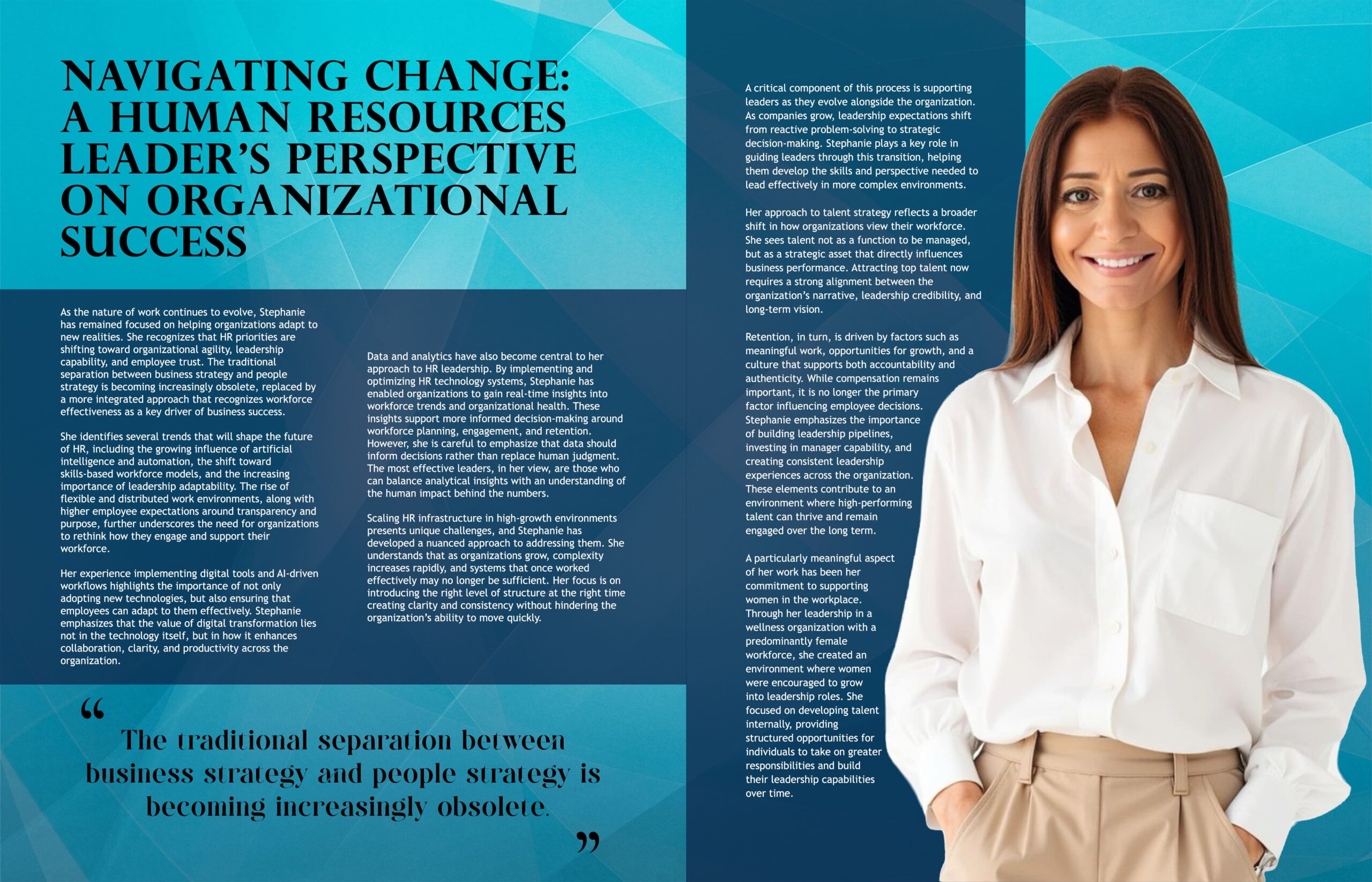
As the nature of work continues to evolve, Stephanie has remained focused on helping organizations adapt to new realities. She recognizes that HR priorities are shifting toward organizational agility, leadership capability, and employee trust. The traditional separation between business strategy and people strategy is becoming increasingly obsolete, replaced by a more integrated approach that recognizes workforce effectiveness as a key driver of business success.
She identifies several trends that will shape the future of HR, including the growing influence of artificial intelligence and automation, the shift toward skills-based workforce models, and the increasing importance of leadership adaptability. The rise of flexible and distributed work environments, along with higher employee expectations around transparency and purpose, further underscores the need for organizations to rethink how they engage and support their workforce.
Her experience implementing digital tools and AI-driven workflows highlights the importance of not only adopting new technologies, but also ensuring that employees can adapt to them effectively. Stephanie emphasizes that the value of digital transformation lies not in the technology itself, but in how it enhances collaboration, clarity, and productivity across the organization.
Data and analytics have also become central to her approach to HR leadership. By implementing and optimizing HR technology systems, Stephanie has enabled organizations to gain real-time insights into workforce trends and organizational health. These insights support more informed decision-making around workforce planning, engagement, and retention. However, she is careful to emphasize that data should inform decisions rather than replace human judgment. The most effective leaders, in her view, are those who can balance analytical insights with an understanding of the human impact behind the numbers.
Scaling HR infrastructure in high-growth environments presents unique challenges, and Stephanie has developed a nuanced approach to addressing them. She understands that as organizations grow, complexity increases rapidly, and systems that once worked effectively may no longer be sufficient. Her focus is on introducing the right level of structure at the right time—creating clarity and consistency without hindering the organization’s ability to move quickly.
A critical component of this process is supporting leaders as they evolve alongside the organization. As companies grow, leadership expectations shift from reactive problem-solving to strategic decision-making. Stephanie plays a key role in guiding leaders through this transition, helping them develop the skills and perspective needed to lead effectively in more complex environments.
Her approach to talent strategy reflects a broader shift in how organizations view their workforce. She sees talent not as a function to be managed, but as a strategic asset that directly influences business performance. Attracting top talent now requires a strong alignment between the organization’s narrative, leadership credibility, and long-term vision. Candidates are increasingly evaluating not only the role itself, but also the organization’s direction, stability, and leadership effectiveness.
Retention, in turn, is driven by factors such as meaningful work, opportunities for growth, and a culture that supports both accountability and authenticity. While compensation remains important, it is no longer the primary factor influencing employee decisions. Stephanie emphasizes the importance of building leadership pipelines, investing in manager capability, and creating consistent leadership experiences across the organization. These elements contribute to an environment where high-performing talent can thrive and remain engaged over the long term.
A particularly meaningful aspect of her work has been her commitment to supporting women in the workplace. Through her leadership in a wellness organization with a predominantly female workforce, she created an environment where women were encouraged to grow into leadership roles. She focused on developing talent internally, providing structured opportunities for individuals to take on greater responsibilities and build their leadership capabilities over time.
Her approach balanced support with accountability, ensuring that individuals were both empowered and challenged as they progressed in their careers. She also emphasized the importance of authenticity in leadership, encouraging individuals to lead in ways that aligned with their strengths rather than conforming to a single model. This approach helped create a diverse and resilient leadership pipeline, demonstrating the impact of intentional investment in development and opportunity.
Navigating periods of disruption and transformation is another area where Stephanie’s leadership has had a significant impact. She understands that change affects not only organizational structures and processes, but also the emotional and psychological well-being of employees. Maintaining engagement during these periods requires clear communication, consistent leadership, and a strong sense of trust.
Building Organizational Capability:
The Strategic Leadership Journey of a Modern HR Leader
She has implemented strategies that prioritize transparency and feedback, ensuring that employees feel informed and heard throughout the change process. By reinforcing communication cadences, introducing engagement surveys, and creating opportunities for dialogue, she helps organizations maintain cohesion and alignment even in uncertain times. Her approach recognizes that successful transformation is not only about achieving operational goals, but also about preserving trust and maintaining a sense of shared purpose.
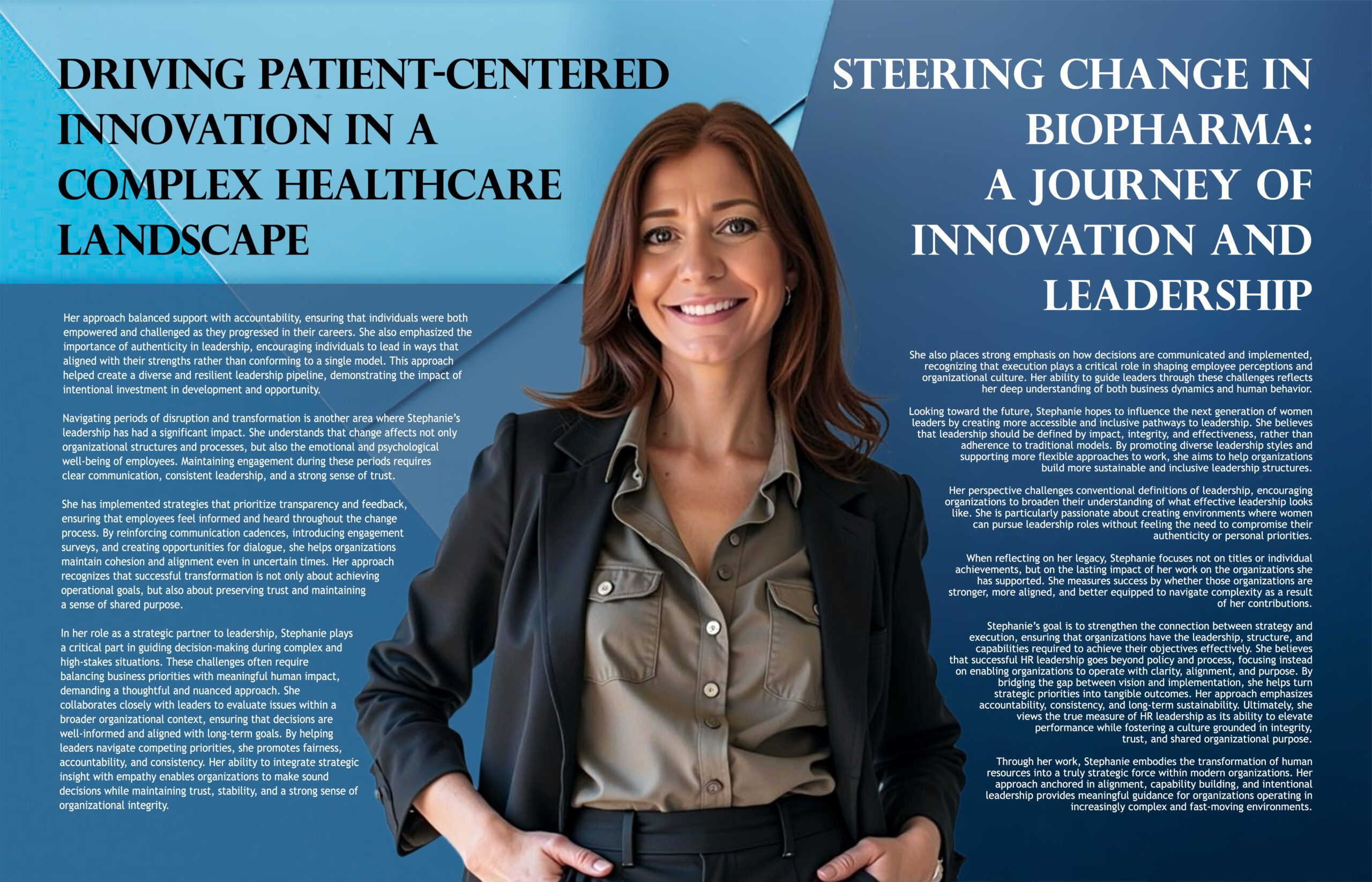
In her role as a strategic partner to leadership, Stephanie plays a critical part in guiding decision-making during complex and high-stakes situations. These challenges often require balancing business priorities with meaningful human impact, demanding a thoughtful and nuanced approach. She collaborates closely with leaders to evaluate issues within a broader organizational context, ensuring that decisions are well-informed and aligned with long-term goals. By helping leaders navigate competing priorities, she promotes fairness, accountability, and consistency. Her ability to integrate strategic insight with empathy enables organizations to make sound decisions while maintaining trust, stability, and a strong sense of organizational integrity.
She also places strong emphasis on how decisions are communicated and implemented, recognizing that execution plays a critical role in shaping employee perceptions and organizational culture. Her ability to guide leaders through these challenges reflects her deep understanding of both business dynamics and human behavior.
Looking toward the future, Stephanie hopes to influence the next generation of women leaders by creating more accessible and inclusive pathways to leadership. She believes that leadership should be defined by impact, integrity, and effectiveness, rather than adherence to traditional models. By promoting diverse leadership styles and supporting more flexible approaches to work, she aims to help organizations build more sustainable and inclusive leadership structures.
Her perspective challenges conventional definitions of leadership, encouraging organizations to broaden their understanding of what effective leadership looks like. She is particularly passionate about creating environments where women can pursue leadership roles without feeling the need to compromise their authenticity or personal priorities.
When reflecting on her legacy, Stephanie focuses not on titles or individual achievements, but on the lasting impact of her work on the organizations she has supported. She measures success by whether those organizations are stronger, more aligned, and better equipped to navigate complexity as a result of her contributions.
Stephanie’s goal is to strengthen the connection between strategy and execution, ensuring that organizations have the leadership, structure, and capabilities required to achieve their objectives effectively. She believes that successful HR leadership goes beyond policy and process, focusing instead on enabling organizations to operate with clarity, alignment, and purpose. By bridging the gap between vision and implementation, she helps turn strategic priorities into tangible outcomes. Her approach emphasizes accountability, consistency, and long-term sustainability. Ultimately, she views the true measure of HR leadership as its ability to elevate performance while fostering a culture grounded in integrity, trust, and shared organizational purpose.
Through her work, Stephanie embodies the transformation of human resources into a truly strategic force within modern organizations. Her approach anchored in alignment, capability building, and intentional leadership provides meaningful guidance for organizations operating in increasingly complex and fast-moving environments.
Ready to build a stronger, future-ready organization?
Stephanie Boggier helps businesses align people, leadership, and strategy to drive sustainable growth. Connect today to discover how strategic HR leadership can transform your organization’s success.